- Home
- Keynote & Invited Speakers
Speakers
EnergEn 2026
Theme 1: Integrated Energy Systems and Circular Energy Infrastructure
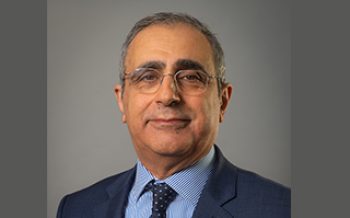
Mohamed Pourkashanian
Mohamed Pourkashanian
Head of Energy Institute at the University of Sheffield, the Managing Director of the Translational Energy Research Centre and the Sustainable Aviation Fuels Innovation CentreHe has completed numerous major research projects on clean energy technology, receiving substantial grants from the EPSRC, EU, and NATO. During his career at the Universities of Sheffield and Leeds, Professor Pourkashanian has successfully managed over 100 research contracts and grants, with a total value of in excess of £73 million –with active research grants for 2019 in excess of £19M and relating to clean energy projects. His research is in the field of future clean and sustainable energy technology with a focus on multi-scale energy processes, zero carbon fuels, and computational and CFD modelling. He and his students have authored over 492 publications in refereed journals and conference proceedings and have co-authored a several books on solid fuels and biomass combustion.
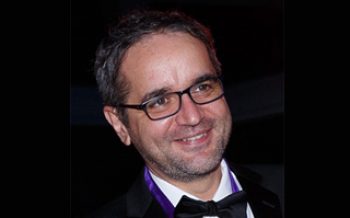
Mircea Dincă
Co-founder Transaera and Daqus Energy
Mircea Dincă
Is the Alexander Stewart 1886 Professor of Chemistry at Princeton University. He grew up in Romania and moved to the United States to pursue his Bachelor’s degree in Chemistry at Princeton University. Graduate studies in Inorganic Chemistry at UC Berkeley were followed by a postdoctoral appointment at MIT. He started his independent career in 2010 at MIT and moved his group to Princeton in 2025. His research focuses on the synthesis of new multifunctional materials for applications in electrical and electronic devices, heterogeneous catalysis, and various uses in clean and renewable energy. He is co-founder of two start-up companies: Transaera, focused on the development of efficient adsorption-based air-conditioning systems, and Daqus Energy, which focuses on the development of organic batteries as sustainable alternatives to transition metal-based lithium- and sodium-ion batteries. He has published over 200 peer-reviewed articles, with over 50,000 citations and an h-index of 96.
Google Scholar: https://scholar.google.com/citations?user=RWC2ERYAAAAJ&hl=en
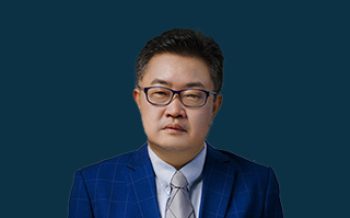
Aishui Yu
Fudan University, China, 863 Program, 973 Program, and the Shanghai Key Research Fund.
Aishui Yu
Fudan University, China
Prof. Aishui Yu obtained Bachelor of Science degree in 1987 and Ph.D degree from Fudan University in 1993. He began his academic career as a lecturer at Fudan University. From 1995 to1997, and then he was a Foreign Scholar at Iwate University in Japan. From 1995 to 1997, he worked at the Institute of Materials Research and Engineering in Singapore. After postdoctoral research in Department of Chemistry in University of Oklahoma (1997-1999), he was a Senior Scientist in Excellatron Solid State LLC in USA (2000-2006). In 2006, he joined Fudan University as a Professor and was funded supports by National Natural Science Foundation, 863 Program, 973 Program, and the Shanghai Key Research Fund. His research interests include lithium ion battery, all solid state lithium battery, sodium ion battery, lithium sulfur battery and lithium air battery. He has published more than 200 papers and 50 authorized and applied invention patents.
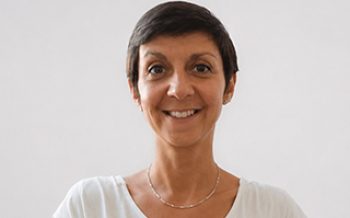
Julia Amici
Associate Professor in the Department of Applied Science and Technology (DISAT) at Politecnico di Torino
Dr. Julia Amici
Professor at Department of Applied Science and Technology (DISAT) at Politecnico di Torino
Julia Amici is an Associate Professor in the Department of Applied Science and Technology (DISAT) at Politecnico di Torino, where she is part of the Electrochemistry Group. Her current research focuses on the synthesis and characterization of highly efficient composite polymer electrolytes for Li-ion, Li-Air, and Li-S batteries, as well as high-performance cathodic materials for Li-Air systems. She serves as the Principal Investigator for Politecnico di Torino in the EU-funded projects SUBLIME (H2020) and ADVAGEN (Horizon Europe), both centered on all-solid-state Li-ion batteries. Julia also plays a leading role as a Senior Researcher in the interdisciplinary Energy Center Lab at Politecnico di Torino, where she coordinates energy storage-related activities as part of a broader effort to develop sustainable energy systems. Julia Amici teaches Chemistry across various undergraduate programs and contributes to advanced courses such as the doctoral course “Battery Systems for Automotive and Stationary Applications” (2023–present) and the international master’s course “New Battery Systems for Mobility” (2022–present). Since 2022, she has served as Vice-Coordinator of the Academic Board for the Ph.D. program in Materials Science and Technology. At the European level, Julia is actively involved in the Battery2030+ initiative, where she co-authored the roadmap “Inventing the Batteries of the Future: Research Needs and Future Actions.” She has been selected as an expert in Working Group 1: New and Emerging Battery Technologies of the ETIP EBA Batteries Europe Platform. Since 2024, she has been a member of the editorial board for the international journal Future Batteries (Elsevier). Since 2026 she is part of the direction committee for the Electrochemical Division of Italian Chemical Society (SCI). She has authored over 70 publications in international peer-reviewed journals and she is the co-inventor of four patents.
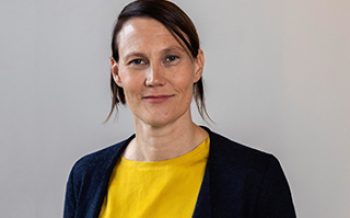
Annukka Santasalo-Aarnio
Associate Professor on Energy Conversion and Storage at Aalto School of Engineering
Annukka Santasalo- Aarnio
Associate Professor on Energy Conversion and Storage at Aalto School of Engineering
Is an associate professor (tenured) on Energy Conversion and Storage at Aalto School of Engineering in. She leads a multidisciplinary research team with focuses on circular design of energy devices, thermal energy storage systems and materials, electrolytic hydrogen production and storage, as well as safe handling of end-of-life batteries. She has strong background in electrochemical systems from her PhD and post doc period. Additionally, she worked for 3 years as a university lecture on circular economy. She has been leading variety of national and European research projects together with academic and industrial partners. She is teaching 3 master level courses on energy storage system and their sustainable development and she is the responsible professor at Aalto for the InnoEnergy Energy Storage master program.
Theme 2: Hydrogen Isotopes, Nuclear and Energy Applications
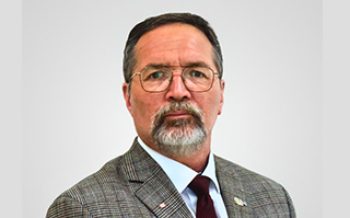
Pavel Gris
Scientific Director at Isowater (Canada), leading research and innovation in heavy water (D₂O) purification, deuterium enrichment, and hydrogen isotope technologies
Dr. Gris
Isowater’s scientific and analytic activities
Dr. Gris leads Isowater’s scientific and analytic activities, focusing mainly on the advancement of the company’s deuterium oxide (D2O) refinery, which upgrades D2O that has been used in industrial processes to market-level purity. He is also involved in advancing technology used to enrich deuterium oxide from ambient concentrations found in natural water. More specifically, Dr. Gris studies the deuterium isotope kinetic effect to enhance the deuterium oxide enrichment process. Dr. Gris joined Isowater in 2018 after a career in academia where he gained extensive experience in a broad range of sciences, research and university-level teaching at Western University, Concordia University, McGill University and University of North Carolina at Chapel Hill. He earned a Ph.D. at Western University in London, Canada, and has completed consecutive post-doctoral appointments at the University of North Carolina at Chapel Hill and McGill University in Montreal. Dr. Gris is a Fellow of the Royal Society of Chemistry and a Chartered Chemist in the Province of Ontario.
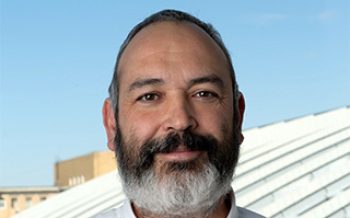
Ioan Dancus
Technical Director of ELI-NP
Associate professor at the University “Politehnica” of Bucharest and the West University of Timisoara
Ioan Dancus
Technical Director of ELI-NP
Associate professor at the University “Politehnica” of Bucharest and the West University of Timisoara
Titlul prezentării este: Extreme Light Infrastructure Nuclear Physics – Status Update
Biografie: Dr. Ioan Dancus is the Technical Director of ELI-NP since August 2024. Previously, for over 6 years, he was the head of the Laser System Department at ELI-NP, where he coordinated the implementation of the 10 PW laser system. He has a PhD in Physics in Nonlinear Optics from the University of Bucharest and the National Institute for Lasers, Plasma and Radiation Physics in Romania. After his PhD, he specialised in the field of high-power lasers and for more than 10 years he has been part of the ELI-NP team. Dr Dancus is an associate professor at the University “Politehnica” of Bucharest and the West University of Timisoara.
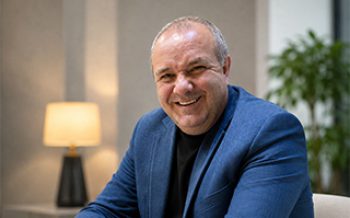
Catalin Ducu
Associate professor at University “Politehnica” of Bucharest
Director for Strategy and Development of RATEN
Catalin Ducu
Associate professor at University “Politehnica” of BucharestDirector for Strategy and Development of RATEN
Catalin Ducu is a physicist by profession, PhD in Physics from the University of Bucharest, with 33 years of experience in research in the field of materials science, especially nuclear materials. He currently holds the positions of associate professor at the National University of Science and Technology POLITEHNICA Bucharest but also that of Director for Strategy and Development of RATEN, where he is also President of the Board of Directors. He has a remarkable scientific activity with more than 100 scientific papers published in mainstream journals, enjoying international scientific recognition through his over 800 citations. He has published three specialized books in the field of Materials Science and Engineering. From the positions he has held over time, he has organized and managed scientific management systems of the departments he created or administered. He is a member of the Steering Committee of the European consortium EAGLES and the president of its Business Committee and the coordinator of the ALFRED project in Romania.
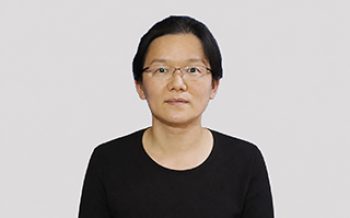
Shanliang Zheng
Institute of Plasma Physics, Chinese Academy of Sciences, ASIPP
Shanliang Zheng
Institute of Plasma Physics, Chinese Academy of Sciences, ASIPP
Dr. Shanliang Zheng is from at the Institute of Plasma Physics, Chinese Academy of Sciences, ASIPP. She has been working in the areas from neutronics to fusion technology and also on nuclear safety for fusion for 20 years. At ASIPP, she is heading the Fusion Blanket & Safety Research Center, overseeing areas including nuclear analysis, radiation safety, fuel cycle and breeding blanket which includes research and development of technologies for hydrogen isotopes handling and safety confinement
Theme 3: Environmental Systems, Climate Action and Water–Energy–Food Nexus
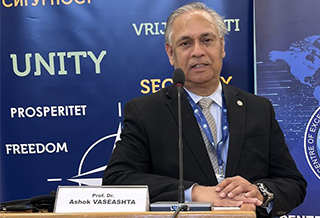
Ashok Vaseashta
International Clean Water Institute, Manassas, VA, Academy of Sciences of Moldova and Riga Technical University
Ashok VASEASHTA
International Clean Water Institute, Manassas, VA, Academy of Sciences of Moldova and Riga Technical University
Chief Research Officer, Executive Director of Research and Chair of Institution Review Board and Office of Research Integrity at NJCU– State University of New Jersey
Prof. Dr. Ashok Vaseashta is a researcher and strategist in nanotechnology, environmental systems, and advanced sensing technologies, focusing on solutions for global challenges related to sustainability, environmental protection, and human safety. His work explores the design and application of nanofibers, nanosensors, and smart materials for environmental monitoring, pollution detection, biomarker sensing, and assessment of toxicity in nano and xenobiotic materials. Integrating nanotechnology with ecological science and security studies, his research contributes to innovative approaches for contamination detection, environmental remediation, and resilient technological systems. His interests also include water quality monitoring, sustainable resource management, and the development of technological platforms supporting the water–energy–food nexus and climate resilience through advanced materials and sensing systems.
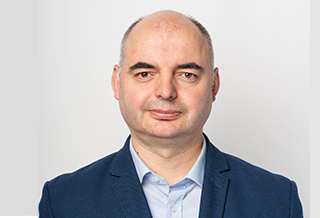
Andrius Garbaras
Andrius Garbaras
Head of Isotopic Research Laboratory, Center for Physical Sciences and Technology (FTMC), Vilnius, Lithuania
Dr. Andrius Garbaras, a senior researcher at FTMC, leads the institution’s isotopic research laboratory. With more than two decades of experience in applying stable isotope techniques to environmental studies, he has established a strong scientific profile in this field. His primary research interests include the development of stable isotope methodologies for identifying aerosol sources and processes, as well as ecological and archaeological applications. In recent years, Dr. Garbaras has increasingly focused on soil–plant interactions and the role of land–sea systems in blue carbon sequestration. He is the author or co‑author of approximately 100 scientific publications (H-Index 20) and teaches a course at Vilnius University on the applications of isotopic and chromatographic methods.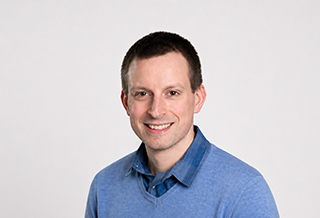
Phil Dunn
Principal Scientist at the National Measurement Laboratory hosted at LGC.
Phil Dunn
Principal Scientist at the National Measurement Laboratory hosted at LGC.
His research interests include good practice, traceability and evaluation of uncertainty within isotope ratio measurements. He participates in a number of international committees and working groups including the Isotope Ratio Working Group (IRWG) of the Consultative Committee for Amount of Substance: Metrology in Chemistry and Biology (CCQM) for the International Committee for Weights and Measures. Since 2011 he has been LGC’s institutional representative on the Steering Group of the FIRMS Network, also serving as the Chair of FIRMS (2015-2021 and 2025 onwards) and was a co-editor of both the second and third editions of the FIRMS Good Practice Guide for IRMS. Phil has been a member of the IUPAC Commission on Isotopic Abundances and Atomic Weights since 2018 and is currently the Secretary of the Commission. He has delivered training on isotopic analyses to organisations within the UK and abroad
(ORCiD: 0000-0002-3848-6187)
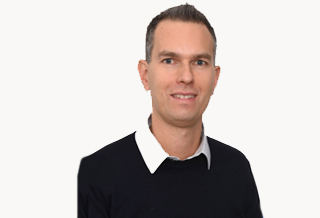
Matteo Perini
Food Authenticity Specialist at the Food Safety and Control Laboratory of the Joint FAO/IAEA Vienna
Dr. Matteo Perini
Food Authenticity Specialist at the Food Safety and Control Laboratory of the Joint FAO/IAEA Vienna
Graduated in Pharmacy from the University of Padua, Italy, and obtained a Ph.D. in Agricultural Science and Biotechnology from the University of Udine, Italy. Since 2003, he has been a researcher at Fondazione Edmund Mach, where he served as the supervisor of the Stable Isotope and Traceability unit within the Centre for Technology Transfer. Since March 2026, he has been working as a Food Authenticity Specialist at the Food Safety and Control Laboratory of the Joint FAO/IAEA Centre in Vienna.
Dr. Perini worked as a contract professor at the Universities of Trento and Padua, where he taught Food Chemistry and Inorganic Chemistry. He is the author of approximately 80 peer-reviewed scientific papers and has contributed to numerous national and international conferences.
Dr. Perini’s research focuses on food analysis, particularly through his involvement in various national and international projects. His main area of expertise is the application of stable isotope ratio analysis of bio-elements to food, with the goal of determining geographical origin and ensuring the quality, authenticity, and traceability of food products.
In recent years, he has extended his research to explore the use of isotopic techniques for verifying the authenticity of nutraceutical, pharmaceutical, and cosmetic products.
Join EnergEn 2026 in Râmnicu Vâlcea, Romania, on October 7–9, 2026, and shape the future of energy and environmental innovation.
Submit your registration for EnergEn 2026 to confirm your participation — comprehensive details regarding fees and guidelines are provided on the official registration page.